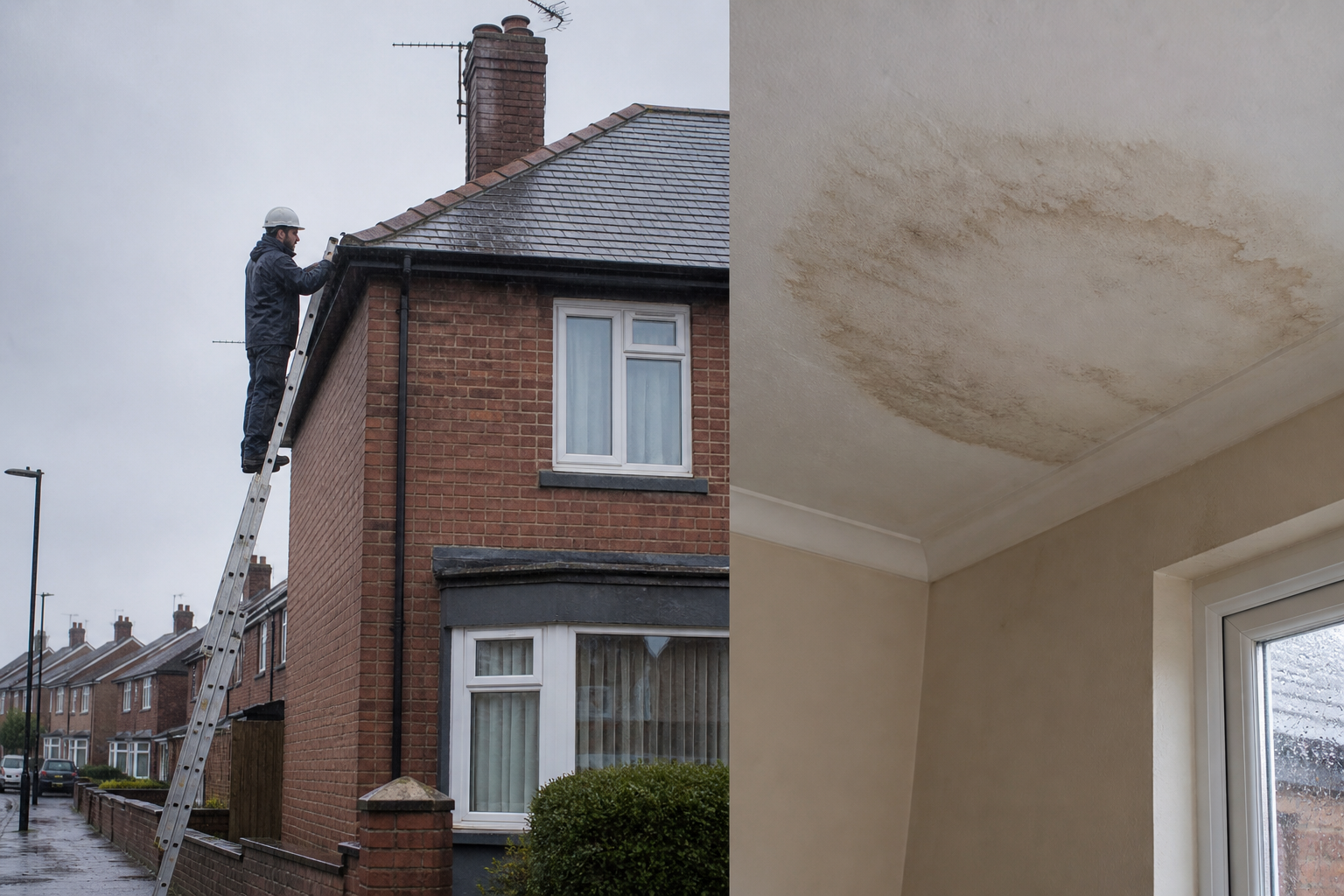
Lead Flashing Repairs in South Shields: Signs Failing Leadwork Is Causing Roof Leaks
Updated: Sep 4
If you are searching for lead flashing repairs South Shields, there is a good chance you have already noticed a leak, damp staining or visible movement around a chimney, wall junction or roof window. Flashing may only be one part of the roof, but when it starts to fail, water can get behind tiles and slates, into loft spaces and down internal walls surprisingly quickly.
At Honour Roofing and Building Ltd, we carry out residential leadwork, flashing repairs, chimney repairs and roof leak investigations across South Shields. In this guide, we explain the warning signs to take seriously, why leadwork fails, and when a targeted repair is likely to solve the problem before minor water ingress turns into wider roof damage.
Lead flashing repairs South Shields: why small defects can lead to bigger leaks
Lead flashing is designed to seal vulnerable joints on a roof. These are the points where different materials meet and where rainwater naturally tries to get in.
Common areas where lead flashing or associated leadwork is used include:
Around chimney stacks
Where a pitched roof meets a wall or parapet
Around roof windows and similar openings
At roof junctions and abutments
On certain valleys, back gutters and stepped details
When lead splits, lifts, slips out of place or loses a sound seal against brickwork, water can bypass the outer roof covering. That is why a roof can appear mostly intact from the ground while still leaking indoors.
What lead flashing actually does
A properly formed flashing detail helps direct rainwater back onto the roof covering and away into the drainage path it is meant to follow. It also needs to accommodate normal movement in the roof structure and the lead itself as temperatures change.
If the detailing is poor, the lead has cracked, or the chase into the brickwork is no longer secure, the waterproofing breaks down. In a coastal location such as South Shields, wind-driven rain can then exploit even a small opening.
Signs failing leadwork is causing roof leaks
Damp patches near a chimney breast or top-floor ceiling
One of the clearest warning signs is staining indoors after rain, especially around a chimney breast, a sloping ceiling or the upper edge of an external wall. Water entry around flashing rarely stays in one place, so the visible mark indoors may not sit directly below the defect.
If the staining worsens after heavy rain or during windy weather, failing flashing becomes a strong possibility.
Lead that looks lifted, split or poorly fixed
From a safe viewpoint at ground level, you may notice lead edges that look raised, uneven or detached from the brickwork. Older lead can also fatigue and split, particularly at stress points or where it has been poorly dressed over time.
Even a narrow crack can allow repeated water ingress. That is why visible damage should be inspected promptly rather than patched casually.
Leaks around roof junctions or abutment walls
Where the roof meets a wall is always a higher-risk detail. If you have damp at the top of a wall, staining in an upstairs room, or signs of moisture after rain on one elevation of the house, the abutment flashing may be at fault.
These areas need careful detailing. A short-term sealant fix is not always enough if the underlying leadwork is loose, badly formed or worn out.
Water ingress around a roof window
Not every roof window leak is caused by the window unit itself. Sometimes the problem lies in the surrounding flashing or the way the area has been weathered into the roof covering.
If you have a recurring leak near a roof window, it makes sense to check both the window and the surrounding lead or flashing detail together. We can inspect this as part of our roof window and leak repair service.
Loose mortar or gaps where flashing enters the brickwork
Lead flashing is often secured into a chase cut into brickwork or mortar joints. If that mortar has cracked, crumbled or opened up, the flashing may no longer be held firmly or sealed correctly.
This is common around chimneys, where flashing defects and masonry defects often appear together. In those cases, both the leadwork and the chimney detail may need attention rather than only one part of the problem.
Why lead flashing fails over time
Age and weather exposure
Lead is durable, but it is not immune to age, repeated wetting and drying, and years of expansion and contraction. Over time, small weaknesses can develop, especially on roofs exposed to harsh conditions.
South Shields properties often have to cope with coastal wind and rain, which can accelerate the impact of minor defects.
Poor installation or unsuitable previous repairs
Some leaks happen because the original detailing was never right. Lead that has been cut too short, fixed incorrectly, chased poorly or dressed badly over the roof covering is more likely to fail.
We also see issues where mastic or patch materials have been applied over a deeper fault. These can sometimes hold briefly, but they do not always deal with movement, poor formation or wider deterioration in the surrounding area.
Movement in the roof or chimney
Flashing sits between different parts of the building that may move in different ways. Slight movement in a chimney stack, roof slope or abutment can gradually break the seal or put stress on the lead.
That is why it is important to inspect the full detail, not just the visible split. Sometimes the flashing is the symptom of movement elsewhere.
Related defects nearby
A leak blamed on flashing is not always caused by the lead alone. Slipped tiles, defective pointing, worn valleys, loose ridge details or water overflow from guttering can all affect the same area.
As part of our inspection, we look at the wider roof so that the repair recommendation matches the real cause. If you are already dealing with active water ingress, our roof leak repairs service can help identify the source quickly.
Lead flashing repair or full replacement: which is the better option?
Not every flashing problem needs a complete replacement. Equally, not every leak should be patched if the leadwork is at the end of its useful life or the detail was poorly formed from the start.
When a repair may be enough
The defect is localised to one section
The surrounding lead remains sound
The flashing has come loose in one area but is otherwise serviceable
The leak is linked to a minor opening, slipped section or isolated failure
When replacement is often the smarter long-term answer
There are multiple cracks, splits or loose sections
The existing detail has been patched repeatedly
The flashing is badly installed or too deteriorated to rely on
The surrounding chimney or roof junction needs broader remedial work
Our aim is to recommend the option that is genuinely sensible for the roof in front of us. If a repair will solve the issue properly, we will say so. If replacement offers better long-term value, we will explain why.
What our roof inspection looks for
A proper lead flashing assessment should go further than a quick glance from the ground. Water can travel, and the point where it shows inside is not always the exact place where it gets in.
We inspect the affected area closely to look for splits, lifting, failed mortar joints and movement in the detail.
We assess nearby roof coverings including slates, tiles and adjoining roof sections that may be contributing to the leak.
We check related structures such as chimney masonry, abutments and roof window junctions.
We identify whether repair or replacement is more suitable based on condition, access and the wider roof context.
We provide a clear quote so you understand what work is needed and why.
Where needed, we can also advise on related chimney repairs and leadwork if the leak involves more than flashing alone.
Why early flashing repairs matter
Lead flashing problems rarely improve by themselves. The longer water is allowed to enter at a junction, the more chance it has to affect surrounding materials.
Acting early can help reduce the risk of:
Repeated damp staining on ceilings and walls
Deterioration in adjacent roof timbers, battens or underlay
Further wear around chimney brickwork and mortar joints
Damage to internal finishes and decoration
More disruptive and expensive repair work later
For many homeowners, the real cost of delay is not just the repair itself. It is the wider mess, inconvenience and uncertainty that comes with a leak that keeps returning.
Why homeowners in South Shields choose Honour Roofing and Building Ltd
We are a South Shields roofing contractor specialising in residential roofing, including flashing repairs, leadwork, roof repairs, chimney work, roof windows and full roof replacements where required. Our approach is built around honest advice, reliable service and long-lasting results.
Homeowners come to us when they want the cause of a leak properly investigated rather than guessed at. That matters with flashing because the defect may involve leadwork, chimney pointing, nearby tiles or a roof junction that needs a more complete repair.
Free quotes for roofing work
TrustMark accredited
Repair work backed by a minimum 12-month guarantee
Clear communication throughout the job
Finance options available for essential roofing work
Customers have praised our quick response, professionalism and clear updates, especially when a leak needs prompt attention.
Frequently asked questions about lead flashing repairs
Can lead flashing be repaired without replacing the whole roof?
Yes, in many cases it can. If the issue is confined to the flashing detail and the surrounding roof is otherwise in good condition, a targeted repair may be the right solution. The key is making sure the leak source has been diagnosed correctly.
How do I know if the leak is from the chimney or the flashing?
The two often overlap. Damp around a chimney breast can come from defective flashing, failed pointing, open joints, worn leadwork or a combination of issues. A proper inspection is the safest way to distinguish between them.
Do you repair flashing around roof windows as well as chimneys?
Yes. Roof windows, abutments and other roof junctions can all develop leak problems if the weathering detail fails. We inspect the surrounding roof area as a whole before recommending repairs.
Why does my roof only leak during heavy rain or strong winds?
This is common with flashing defects. Wind-driven rain can force water into small openings that may not show up in lighter weather. A roof that seems fine most of the time can still have a vulnerable junction detail that needs attention.
Is it worth fixing lead flashing quickly if the leak seems minor?
Usually, yes. Small leaks can spread into larger damp problems if left too long. Early repair is often less disruptive than waiting until water damage becomes more obvious indoors.
Book a roof inspection for lead flashing repairs in South Shields
If you have noticed loose lead, damp patches, staining after rain or recurring leaks around a chimney, wall junction or roof window, do not leave it to worsen. Honour Roofing and Building Ltd can inspect the area, explain whether repair or replacement is the better option, and provide a clear quote for the work.
To arrange a roof inspection and request your free quote, contact us on 07903147893, email info@honourroofing.co.uk, or visit Honour Roofing and Building Ltd. Acting early can stop a minor flashing defect becoming wider roof damage.