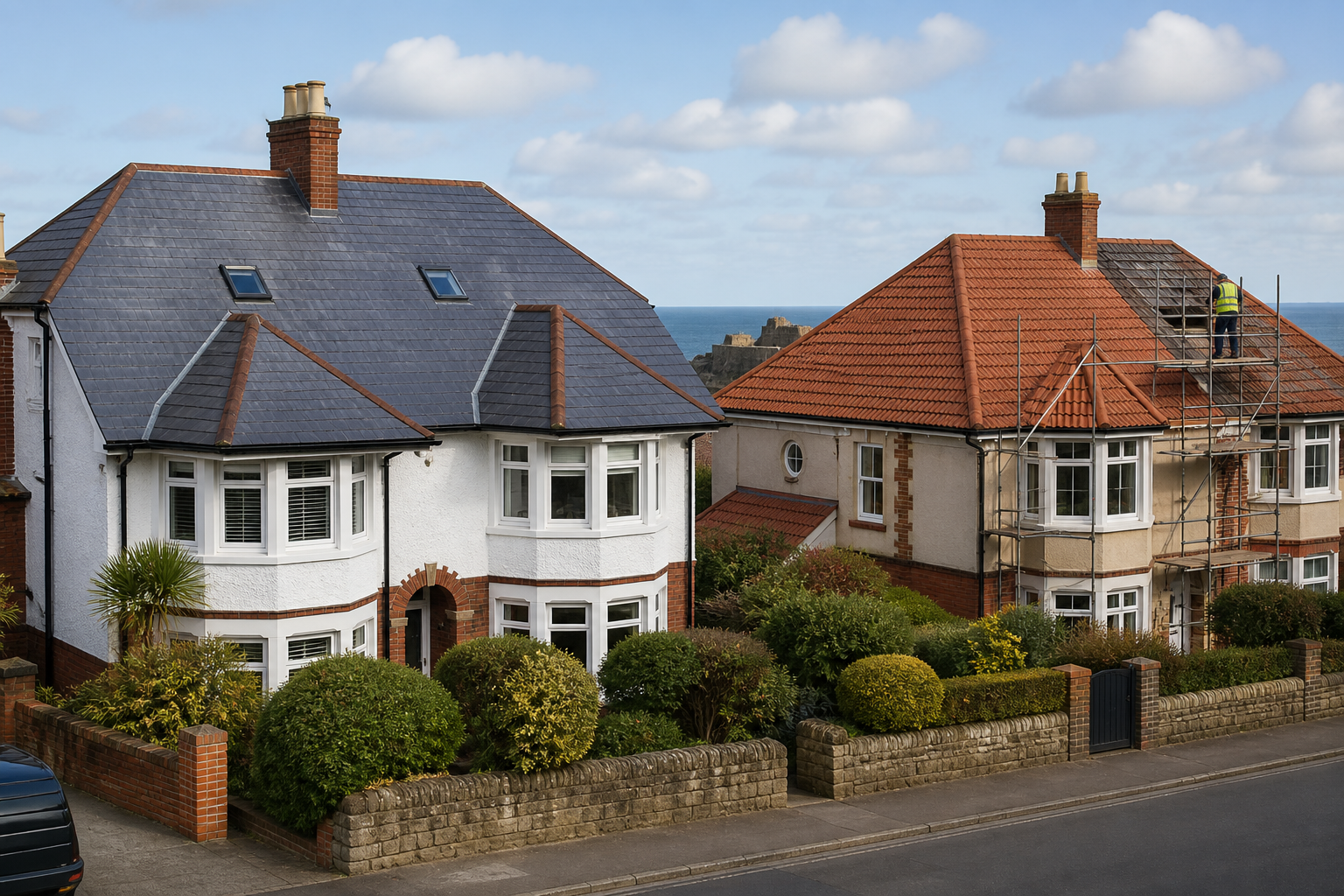
Damp Proofing South Shields: How to Tell if Internal Damp Starts at the Roof
If you are searching for damp proofing South Shields homeowners can rely on, the first thing to know is this: internal damp is a symptom, not a diagnosis. A stain on a ceiling or wall does not automatically mean you need damp-proofing treatment. In many cases, the real cause is higher up, such as a roof leak, defective flashing, chimney fault or overflowing guttering.
At Honour Roofing and Building Ltd, we help homeowners across South Shields work out where the moisture is actually coming from. That matters because the right fix could be a local roof repair, chimney work, guttering repair, targeted damp proofing, or a combination of these. Getting the diagnosis right early helps you avoid unnecessary work and stops the damage spreading further indoors.
Damp Proofing South Shields: why the real cause matters
Internal damp can look similar even when the source is completely different. Peeling paint, stained plaster, mould growth and musty smells are all warning signs, but they do not tell the full story on their own.
The key question is not simply where you can see the damp. It is where the water is getting in. Rainwater can travel through roof structures, down chimney masonry, behind plaster and along timbers before it becomes visible inside the property. That is why the patch you can see is not always directly below the defect that caused it.
In a coastal location such as South Shields, wind-driven rain can also exploit small weaknesses around roof coverings, eaves, leadwork and chimneys. A defect that looks minor from the ground can create a much larger internal problem over time.
Signs the problem may be coming from the roof
The damp patch is on a ceiling or high up a wall
When damp appears on an upstairs ceiling, around a loft hatch, near the top of a bedroom wall or close to the ceiling line, the source is often at roof level. Damp-proofing issues lower in the structure do not usually show in those positions first.
It gets worse after heavy rain
If the patch darkens after rainfall or windy weather, that is a strong clue that water is getting in from outside. Homeowners often notice the stain seems to dry slightly between wet spells, then reappear more clearly after bad weather.
The staining is near a chimney breast, roof window or external corner
These areas are all common entry points for rainwater. Defective flashing, open mortar joints, worn leadwork, damaged roof coverings and failed detailing around openings can all allow moisture in.
You have a musty loft or visible signs in the roof space
Damp insulation, stained rafters, a lingering musty smell or visible daylight around roof details can all point to a roofing defect rather than a damp issue beginning within the wall itself.
The problem started after storms or prolonged wet weather
Where internal damp appears after high winds or driving rain, it is sensible to consider slipped tiles, cracked slates, lifted leadwork, damaged ridges or overflowing gutters as possible causes.
When damp proofing may be the more suitable route
Not every damp problem starts at the roof. Sometimes the pattern points more clearly towards a damp-proofing investigation or another lower-level moisture issue.
Low-level damp on ground-floor walls
If the main signs are concentrated near skirting boards, at the bottom of walls or in a limited ground-floor area, the issue may not be roof-related. It could require a more targeted damp-proofing assessment instead.
The damp does not noticeably change with rainfall
When the symptoms stay much the same whether the weather is dry or wet, that can suggest the source is not simply rainwater entering through the roof covering or roofline.
Condensation is being mistaken for penetrating damp
Surface moisture, black mould in corners, streaming windows and recurring damp around poorly ventilated rooms can point to condensation rather than a roof leak. That said, condensation and external water ingress can exist at the same time, so it is worth having the full picture checked properly.
Roofing defects that commonly cause internal damp in South Shields
When damp is linked to the roof, the actual fault is not always obvious from street level. Some of the most common causes include:
Slipped, cracked or missing tiles and slates allowing water beneath the main covering.
Defective lead flashing around chimneys, abutments and roof windows.
Chimney defects such as worn pointing, open joints or unstable masonry.
Blocked, leaking or overflowing gutters saturating the wall below.
Damaged fascias and soffits allowing persistent moisture around the eaves.
Flat roof wear on extensions, porches or bay roofs where water is getting past weak details.
Roof window defects where the surrounding weathering has failed.
If the damp appears to be roof-related, our roof repairs in South Shields service is designed to identify the cause and recommend the most suitable repair. Where the issue centres on a stack or junction, we also carry out chimney repairs and lead flashing work. If water is tracking from the roof edge, our guttering and roofline repairs service can help stop repeat saturation around walls and eaves.
How to tell the difference before you book
You should not try to diagnose everything from one clue, but a few patterns can help point you in the right direction.
Internal damp is more likely to be roofing-related if:
The staining is on an upstairs ceiling or high on a wall.
The patch worsens after rain or storms.
The issue sits close to a chimney breast, roof window, valley or outside wall junction.
You can see external defects such as slipped coverings, loose flashing or overflowing gutters.
The problem started suddenly rather than developing slowly at skirting level.
Internal damp is more likely to need damp-proofing input if:
The moisture is concentrated low down on ground-floor walls.
The symptoms are less obviously linked to wet weather.
The wall surface is affected more than the ceiling above.
There are recurring signs in the same lower-level area without clear roof defects overhead.
In some properties, the answer is not one or the other. For example, a house could have overflowing guttering wetting the wall externally while poor ventilation is also making the internal finish worse. That is why a careful inspection matters more than guesswork.
Damp Proofing South Shields: what we check before recommending a fix
At Honour Roofing and Building Ltd, we focus on finding the source before recommending any work. A proper assessment typically involves looking at the issue from more than one angle.
We consider the location of the staining. High-level damp and ceiling marks usually tell a different story from low-level wall moisture.
We ask when the problem appears or worsens. A strong link to rain often points towards the roof, chimney or roofline.
We inspect the vulnerable external areas. This can include tiles, slates, flashing, ridges, chimneys, gutters, fascias and soffits.
We look for signs of water tracking. Moisture can enter in one place and travel before showing indoors.
We recommend the most suitable route. That may be roofing work, chimney repair, guttering work, damp proofing, or a combination where appropriate.
The aim is simple: treat the cause, not just the visible symptom.
What homeowners should do before an inspection
Make a note of when the damp gets worse. After heavy rain, after storms or all the time can each suggest something different.
Take clear photos over a few days or weeks. Changes in the size or colour of the patch can be useful.
Do not just repaint over the stain. Cosmetic work may hide the problem temporarily, but it will not stop further moisture coming in.
Do not climb onto the roof. If you suspect a roofing issue, keep safety first and book a professional inspection instead.
Why homeowners in South Shields ask us to investigate internal damp
We provide residential roofing and damp-proofing solutions from our South Shields base, with services covering roof repairs, new roofs, chimney work, guttering, leadwork, roof windows and related remedial work. That means we can look at internal damp in context rather than assuming every case needs the same answer.
Honour Roofing and Building Ltd is TrustMark accredited and offers free quotes. We focus on clear advice, reliable service and long-lasting results. Where relevant work is recommended, new pitched roof installations are advertised with a 25-year guarantee, repair work carries a minimum 12-month guarantee, and guttering, fascias and soffits are backed by a 10-year guarantee.
If you want a contractor who can assess whether the issue is roofing, roofline or damp-related, you can also explore our roof leak repairs and damp-proofing services to see the range of work we carry out.
Frequently asked questions
Can a roof leak cause damp walls upstairs?
Yes. Water from a roof defect can travel before it becomes visible, so the damp patch may show on an upstairs wall, ceiling edge or chimney breast rather than directly under the point of entry.
Do I need damp proofing if the patch gets worse when it rains?
Not always. If the damp becomes more noticeable after rainfall, the source may be the roof, chimney, flashing or guttering rather than a damp-proofing issue. An inspection is the best way to confirm it.
Can leaking gutters cause internal damp?
Yes. Overflowing or defective gutters can repeatedly soak external masonry and roof edges, which may then lead to internal damp, staining and damage to plaster finishes.
Should I repair the plaster before fixing the source of the damp?
No. It is usually better to identify and stop the moisture first. Repairing internal finishes too early can mean the problem returns and the same area has to be redone.
Who should I call if I am not sure whether I need damp proofing or roof repairs in South Shields?
If you are unsure whether the issue starts at the roof, chimney, guttering or wall itself, book an inspection with a contractor who handles both roofing-related defects and damp-proofing solutions. That way, the advice can be based on the actual cause rather than assumptions.
Conclusion
Internal damp is easy to misread. High-level staining, damp near chimneys, patches that worsen after rain and moisture around eaves often point towards roofing or roofline faults rather than a failed damp course. Low-level wall damp may need a different solution.
If you have noticed internal damp in your South Shields home, arrange an inspection with Honour Roofing and Building Ltd. We will identify the likely source and advise on the most suitable roofing or damp-proofing solution, so you can deal with the real problem before it causes wider damage.